
Introduction
Axe throwing has rapidly gone from a niche pastime in the Canadian lumberjack community to one of the fastest-growing social activities in the United States. From corporate team-building events to weekend date nights, the appeal is undeniable. The satisfying *thunk* of steel sinking into wood offers an adrenaline rush unlike any other — and Austin, Texas, has quickly become a hotspot for this exciting trend.
But axe throwing is not just about tossing sharpened steel at a bullseye target. It's a sport that requires precision, technique, and mental focus. Whether you're a complete beginner looking to try something new or an experienced thrower aiming to perfect your form, understanding the fundamentals can dramatically improve your performance and enjoyment.
Austin's unique blend of outdoor culture, innovative entertainment venues, and diverse community has made it a natural home for axe throwing. The city's "Keep Austin Weird" mentality perfectly aligns with this unconventional but thrilling activity. Local venues have elevated the experience beyond simple target practice, incorporating technology, competition formats, and social elements that make axe throwing accessible and exciting for everyone.
This comprehensive guide will take you through everything you need to know about axe throwing in Austin. We'll cover the history and cultural significance of the sport, detailed technique instructions, safety protocols, venue recommendations, and tips for making the most of your axe throwing experience. Whether you're planning a bachelor party, corporate event, or just want to try something different on a Saturday night, this guide will prepare you for success.
The Cultural Phenomenon
Axe throwing is more than a recreational activity; it's a cultural phenomenon. In cities across the U.S., people are looking for experiences that combine skill, adrenaline, and social connection. Austin is uniquely positioned to host this growing trend due to its strong nightlife, thriving community, and love of unconventional fun.
The modern axe throwing movement traces its roots to backyard competitions in Canada in the early 2000s. Groups of friends started hurling axes at makeshift targets, and word spread about this primal, stress-relieving activity. The first commercial axe throwing venue, Backyard Axe Throwing Competition (BATL), opened in Toronto in 2006, and the concept quickly caught fire across North America.
What makes axe throwing particularly appealing in Austin is how it fits into the city's broader entertainment ecosystem. Austin has always celebrated activities that bring people together—from music festivals to food truck gatherings to outdoor adventures. Axe throwing taps into this communal spirit while offering something genuinely different from the typical bar or restaurant outing.
The psychological appeal of axe throwing runs deep. In our increasingly digital world, there's something fundamentally satisfying about engaging in a physical, skill-based activity. The act of throwing an axe requires complete focus and presence—all other thoughts fade away as you concentrate on your target. This creates a natural form of mindfulness that many participants find deeply therapeutic.
Furthermore, axe throwing connects us to our ancestral skills. For thousands of years, humans have used tools like axes for survival and work. While modern life has largely eliminated the need for these skills, axe throwing allows us to reconnect with this primal competency in a safe, controlled environment. There's an innate satisfaction in mastering a skill that feels both ancient and immediate.
The social dynamics of axe throwing also contribute to its cultural appeal. Unlike many recreational activities that can become highly competitive or exclusive, axe throwing is inherently inclusive. Success depends more on technique and focus than physical strength or athletic ability. This levels the playing field and creates opportunities for people of all backgrounds and fitness levels to participate and excel.
History and Origins
The history of axe throwing stretches back millennia, with evidence of throwing axes being used as both tools and weapons across numerous cultures. Ancient Celtic warriors were known for their skill with throwing axes, and similar techniques were developed independently by various indigenous peoples around the world. However, the modern recreational version of axe throwing has much more recent origins.
The contemporary axe throwing movement began in the logging communities of Canada, where lumberjacks would compete in various skill challenges during their downtime. These competitions included log rolling, wood chopping, and axe throwing accuracy contests. What started as informal competitions between workers gradually evolved into more organized events and eventually caught the attention of entrepreneurs looking to commercialize the experience.
The transition from backyard hobby to commercial entertainment accelerated in the mid-2000s when venues began creating standardized rules, safety protocols, and competition play. The WATL (WATL) was established to create consistent standards and organize competitive play across venues. Today, WATL sanctioned venues can be found throughout North America, with standardized target designs, throwing distances, and scoring systems.
Austin's entry into the axe throwing scene reflects the city's broader tendency to embrace innovative entertainment concepts. As the tech industry brought young professionals seeking novel experiences to the city, demand grew for activities that offered hands-on engagement and social interaction. Axe throwing venues began appearing in Austin around 2015-2017, coinciding with the nationwide boom in experiential entertainment.
The sport has continued to evolve, with modern venues incorporating technology like digital scoring systems, projection mapping, and interactive games that transform traditional axe throwing into immersive entertainment experiences. This technological integration aligns perfectly with Austin's identity as a tech hub while preserving the fundamental appeal of the ancient skill.
Understanding the Equipment
Before diving into technique, it's essential to understand the equipment used in recreational axe throwing. Unlike the heavy, work-oriented axes you might find in a hardware store, throwing axes are specifically designed for accuracy and safety. These axes are typically lighter, better balanced, and feature design elements that make them safer to use in commercial environments.
Standard throwing axes used in most venues weigh between 1.25 and 1.75 pounds and measure approximately 12-15 inches in total length. The head of the axe features a sharp cutting edge on one side and a flat or slightly rounded surface on the other (called the eye or poll). The handle is typically made of hardwood, often hickory or ash, chosen for its strength and shock-absorption properties.
The balance point of a throwing axe is crucial to its performance. Most quality throwing axes are balanced so that the center of gravity falls approximately 3-4 inches from the bottom of the handle. This balance allows for consistent rotation and predictable flight patterns when thrown properly. Understanding your axe's balance point helps you adjust your grip and throwing technique for optimal results.
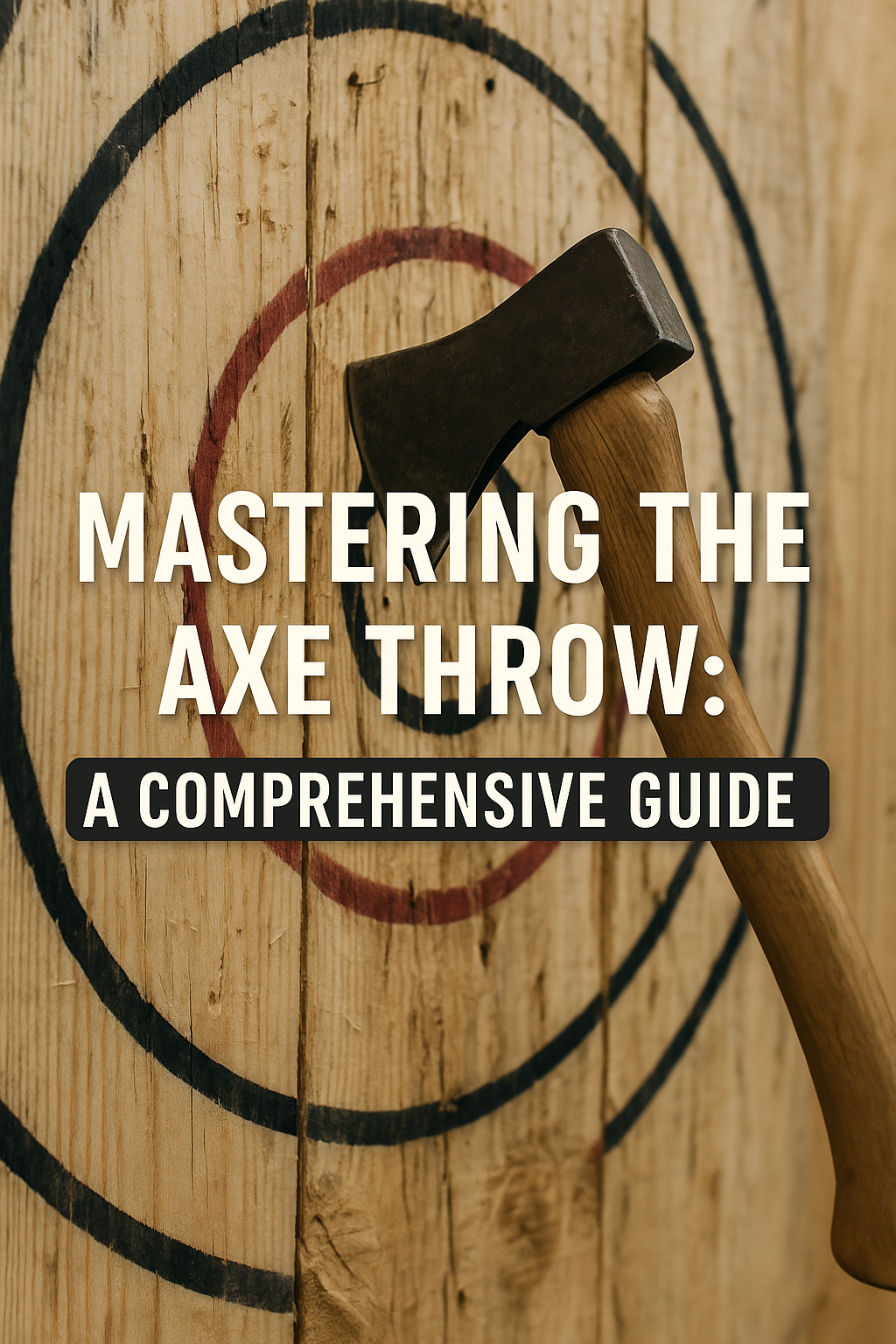
Target construction is equally important to the axe throwing experience. Professional venues use targets made from specific types of wood that provide the right combination of softness for the axe to stick and durability to withstand repeated impacts. Eastern White Pine and Poplar are common choices, as they offer good holding power without being so hard that axes bounce off or so soft that they create large holes.
The standard WATL target consists of four rings with different point values. The outermost ring (1 point) has a diameter of approximately 24 inches, while the innermost bullseye (6 points) measures 3.5 inches in diameter. Understanding target construction and scoring zones helps you set realistic goals and track your improvement over time.
Safety equipment in professional venues includes protective barriers between throwing lanes, clear safety protocols, and trained staff supervision. Many venues also provide instruction on proper throwing technique and safety procedures before allowing participants to begin throwing. This professional approach to safety has been crucial in making axe throwing accessible to the general public.
Fundamental Throwing Technique
Mastering axe throwing technique is a journey that begins with understanding the fundamentals and progresses through consistent practice and refinement. While the basic motion might seem simple—throwing an axe at a target—achieving consistent accuracy requires attention to multiple technical elements working in harmony.
Step 1: Proper Stance and Positioning
Begin by positioning yourself at the throwing line, typically 12 feet from the target for standard one-rotation throws. Stand with your feet shoulder-width apart, with your non-dominant foot slightly forward. Your body should be square to the target, with your shoulders parallel to the throwing line. This stable base provides the foundation for consistent throws.
Maintain a slight bend in your knees and keep your weight evenly distributed. Avoid leaning too far forward or backward, as this can affect your balance and throw consistency. Your stance should feel natural and comfortable, allowing for a smooth throwing motion without straining any part of your body.
Step 2: Grip and Hand Position
Grip the axe handle firmly but not tensely with your dominant hand. Your hand should be positioned near the bottom of the handle, with your thumb pointing toward the axe head. The grip should be firm enough to control the axe throughout the throwing motion but relaxed enough to allow for a clean release.
Your non-dominant hand can be used for initial aiming and balance but should not grip the axe handle during the throw. Some throwers prefer to place their non-dominant hand lightly on the handle during setup, then remove it just before the throwing motion begins. Experiment with different grip positions to find what feels most comfortable and produces the most consistent results.
Step 3: The Throwing Motion
The throwing motion begins with the axe held above and slightly behind your head, with your elbow bent and the axe head pointing upward. Your throwing arm should be close to your body, not extended outward. This starting position allows for maximum power and control throughout the throwing motion.
Begin the throw by bringing the axe forward in a smooth, arc-like motion. Keep your elbow close to your body and your wrist straight throughout the motion. The power for the throw should come primarily from your shoulder and arm, not from snapping your wrist or rotating your body excessively.
The release point is critical to accuracy. Release the axe when your arm is roughly parallel to the ground, with your hand pointing directly at your target. The release should be smooth and natural, without any additional wrist snap or finger manipulation. Let the axe's natural rotation carry it to the target.
Timing and rhythm are crucial elements that develop with practice. Each thrower will eventually develop their own natural timing that produces consistent results. Focus on making each throw as similar as possible to the previous one, paying attention to your stance, grip, throwing motion, and release point. Consistency in these elements leads to consistent results on the target.
The mental aspect of axe throwing is equally important as the physical technique. Approach each throw with focused intention, visualizing the axe hitting your target before you begin the throwing motion. Maintain confidence in your ability and avoid overthinking the technical aspects once you've established your basic form. Trust your muscle memory and let your body execute the motion naturally.
Common beginner mistakes include gripping the axe too tightly, throwing too hard, and inconsistent release points. Remember that axe throwing is more about precision and technique than raw power. A smooth, controlled throw will almost always outperform a forceful but uncontrolled one. Focus on developing consistent form before trying to increase your throwing speed or power.
Advanced Techniques and Tips
Once you've mastered the fundamental throwing technique and can consistently stick axes in the target, you can begin exploring advanced techniques that will improve your accuracy and scoring potential. These advanced methods require patience and practice but can significantly enhance your axe throwing performance and enjoyment.
Distance adjustment is one of the most valuable advanced skills to develop. Different throwing distances require subtle modifications to your technique to account for the axe's rotation. At 12 feet (standard one-rotation distance), the axe completes approximately one full rotation before hitting the target. At 15 feet, it completes about 1.25 rotations, and at 18 feet, roughly 1.5 rotations.
To adjust for different distances, you can modify either your grip position on the handle or your throwing force. Moving your grip higher on the handle (closer to the axe head) slows the rotation slightly, while gripping lower on the handle increases rotation speed. Similarly, throwing with slightly less force can slow rotation, while increased force speeds it up.
Target awareness and zone scoring become increasingly important as your accuracy improves. Rather than simply aiming for the general target area, advanced throwers learn to target specific scoring zones consistently. The highest point values are typically found in the center bullseye and the smaller target zones, which require greater precision but offer significantly higher scores.
Developing a pre-throw routine can dramatically improve consistency and performance. This routine might include specific breathing patterns, visualization techniques, stance adjustments, or practice motions. The key is to develop a routine that helps you achieve the same mental and physical state before each throw, leading to more consistent results.
Reading the target and adapting to conditions is another advanced skill. Different venues may use slightly different target materials or setups that affect how axes stick and score. Experienced throwers learn to quickly assess target conditions and adjust their throwing accordingly. Factors like wood moisture, target wear patterns, and venue-specific rules can all influence optimal throwing strategy.
Competitive throwing introduces additional mental and strategic elements to consider. In competition play or tournament settings, throwers must manage pressure, adapt to different opponents, and make strategic decisions about risk versus reward in their target selection. Developing mental toughness and strategic thinking can be as important as physical technique in competitive settings.
Practice efficiency becomes crucial for serious improvement. Rather than simply throwing axes repeatedly, advanced practitioners focus on deliberate practice that targets specific weaknesses or skills. This might involve practicing at different distances, working on specific target zones, or practicing under various conditions to build adaptability and consistency.
Safety Protocols and Best Practices
Safety is the foundation of recreational axe throwing, and understanding proper safety protocols is essential for anyone participating in the activity. Professional venues have developed comprehensive safety systems that make axe throwing statistically safer than many common recreational activities, but these systems only work when participants understand and follow established procedures.
The physical layout of professional axe throwing venues is designed with safety as the primary consideration. Throwing lanes are separated by sturdy barriers that prevent axes from crossing between lanes. Target areas are designed with backstops and side barriers that contain errant throws. The throwing distance is standardized to ensure consistent axe rotation and predictable flight patterns.
Personal protective equipment requirements vary by venue but typically include closed-toe shoes and clothing that allows for free arm movement. Some venues may provide or require additional protective equipment like safety glasses or gloves. It's important to follow each venue's specific equipment requirements and recommendations.
Axe retrieval protocols are among the most critical safety procedures to understand and follow. In most venues, axes are retrieved only when all throwing in adjacent lanes has stopped and all participants are behind the throwing line. This prevents accidents caused by people walking into throwing areas while axes are still being thrown. Never attempt to retrieve an axe while others are throwing, regardless of how confident you feel about the timing.
Alcohol consumption policies at axe throwing venues are typically more restrictive than at traditional bars or restaurants. Most venues allow limited alcohol consumption but maintain strict policies about intoxication levels and may refuse service or ask patrons to leave if they appear impaired. These policies exist for obvious safety reasons and should be respected and followed.
Group supervision and instruction are essential components of venue safety programs. Professional venues provide safety briefings and basic instruction to all participants before they begin throwing. These sessions cover proper throwing technique, safety procedures, and venue-specific rules. Pay attention during these briefings and ask questions if anything is unclear.
Emergency procedures and first aid capabilities are important considerations when choosing an axe throwing venue. Reputable venues will have trained staff, first aid supplies, and established procedures for handling any incidents that might occur. While serious injuries are extremely rare in professional venues, it's reassuring to know that proper emergency protocols are in place.
Personal responsibility remains the most important safety factor. Follow all venue rules and staff instructions, stay alert and focused while throwing, and never engage in horseplay or unsafe behavior. Axe throwing is inherently safe when proper procedures are followed, but it requires constant attention and respect for the equipment and environment.
Austin's Axe Throwing Scene
Austin's axe throwing scene reflects the city's broader commitment to innovative entertainment and community building. Local venues have embraced both traditional elements of the sport and cutting-edge innovations that enhance the experience for participants of all skill levels. The result is a diverse ecosystem of axe throwing options that cater to different preferences, group sizes, and occasions.
The venues throughout Austin have developed distinct personalities and specialties while maintaining the core safety and quality standards that make axe throwing accessible to everyone. Some focus on creating authentic, rustic environments that emphasize the traditional aspects of the sport, while others incorporate modern technology and interactive elements that transform axe throwing into a high-tech entertainment experience.
Competition play and competitive opportunities are thriving in Austin's axe throwing community. Multiple venues host regular competition competitions that welcome players of all skill levels, from complete beginners to seasoned competitors. These friendly competitions provide structured competition, skill development opportunities, and social connections within the local axe throwing community.
Corporate and group events have become a significant part of Austin's axe throwing scene. Local businesses have discovered that axe throwing provides excellent team-building opportunities that combine skill development, friendly competition, and shared accomplishment. The activity's inclusive nature makes it ideal for diverse groups with varying physical abilities and interests.
Special events and themed competitions add excitement and variety to the local scene. Many venues host seasonal tournaments, charity fundraisers, and themed nights that attract both regular participants and newcomers. These events often feature modified rules, special prizes, and social elements that extend beyond traditional axe throwing competition.
The integration of Austin's axe throwing venues with the city's broader entertainment ecosystem has been remarkable. Many venues are located near popular restaurants, bars, and other entertainment options, making it easy to incorporate axe throwing into larger social outings. This integration reflects Austin's culture of combining multiple experiences into memorable evenings or events.
Instruction and skill development opportunities are widely available throughout Austin's axe throwing community. Most venues offer beginner instruction, and many provide advanced coaching for participants interested in developing competitive skills. Some venues also host workshops and clinics that focus on specific aspects of technique or competition strategy.
The community aspect of Austin's axe throwing scene extends beyond individual venues to encompass a city-wide network of enthusiasts, competitors, and casual participants. Social media groups, online forums, and informal meetups help connect people interested in the sport and facilitate knowledge sharing and friendship building across the community.
Planning Your Visit
Successfully planning an axe throwing experience requires consideration of several factors that can significantly impact your enjoyment and the overall experience for your group. Understanding these factors and planning accordingly will help ensure that your visit exceeds expectations and creates positive memories for all participants.
Group size and composition are primary considerations when planning your visit. Most venues can accommodate groups ranging from couples to large corporate events, but different group sizes may be better suited to different venues or experiences. Smaller groups often benefit from more personalized instruction and attention, while larger groups might enjoy the energy and competition that comes with more participants.
Timing and scheduling considerations can significantly affect your experience. Weekday visits often provide more relaxed environments with greater staff availability for instruction and assistance. Weekend visits tend to be busier and more energetic but may involve longer wait times and less individual attention. Evening sessions often have more social energy, while afternoon visits might be better for groups that prefer quieter environments.
Reservation policies vary among venues, but advance booking is generally recommended, especially for larger groups or weekend visits. Many venues offer online booking systems that allow you to select specific time slots and group sizes. Some venues also offer package deals that include multiple activities or extended playing time, which can provide better value for groups planning longer visits.
Dress code and personal preparation can impact both safety and comfort during your visit. Closed-toe shoes are universally required, and clothing that allows for free arm movement is recommended. Avoid loose jewelry or clothing that might interfere with throwing motions. Some venues provide lockers or storage areas for personal belongings that might be unsafe or inconvenient during throwing sessions.
Budget planning should account for both the activity costs and potential additional expenses like food, drinks, parking, and tips. Many venues offer group packages or special pricing for longer sessions that can provide better value than individual pricing. Some venues also offer combination packages that include axe throwing plus other activities or amenities.
Physical considerations and accessibility vary among venues, but most can accommodate participants with different physical abilities and fitness levels. If anyone in your group has mobility concerns, physical limitations, or health conditions that might affect participation, contact the venue in advance to discuss accommodations and alternatives.
Transportation and parking logistics can be important, especially for larger groups or venues in busy areas of Austin. Research parking availability and costs in advance, and consider rideshare options if parking is limited or expensive. Some venues may be accessible by public transportation, which can be convenient for groups that plan to consume alcohol during their visit.
The Social and Psychological Benefits
Beyond the obvious entertainment value, axe throwing offers significant social and psychological benefits that contribute to its growing popularity and cultural impact. Understanding these benefits can help you maximize the positive effects of participation and appreciate the deeper value that axe throwing brings to individuals and communities.
Stress relief and mental health benefits are among the most frequently cited reasons people are drawn to axe throwing. The physical act of throwing provides an excellent outlet for releasing tension and frustration in a controlled, safe environment. The focus required for accurate throwing creates a natural form of mindfulness that helps participants disconnect from daily stressors and achieve a meditative state of concentration.
Social bonding and relationship building occur naturally through shared axe throwing experiences. The activity creates opportunities for encouragement, coaching, and mutual support that strengthen relationships between friends, family members, and colleagues. The shared accomplishment of learning a new skill together creates positive associations and memories that enhance interpersonal connections.
Confidence building and personal achievement are significant psychological benefits of axe throwing participation. Mastering the basic technique and achieving consistent accuracy provides a genuine sense of accomplishment that boosts self-confidence and self-efficacy. The skill-based nature of the activity means that improvement is measurable and satisfying, providing ongoing motivation for continued participation.
Team building and collaboration skills are naturally developed through group axe throwing experiences. Participants learn to support each other, share strategies, and celebrate collective achievements. The activity provides opportunities for leadership, communication, and problem-solving that translate to other areas of life and work.
Physical activity and coordination benefits, while not the primary focus of axe throwing, contribute to overall health and wellness. The throwing motion engages core muscles, improves hand-eye coordination, and provides moderate physical exercise. While axe throwing shouldn't replace regular fitness activities, it can complement an active lifestyle in an enjoyable way.
Cultural connection and historical appreciation are subtle but meaningful benefits of axe throwing participation. Engaging in this ancient skill connects participants to human history and traditional crafts in a tangible way. This connection to the past can provide perspective and appreciation for traditional skills and ways of life.
Community building and social networking opportunities are enhanced through participation in local axe throwing scenes. Regular participants often develop friendships and social connections that extend beyond the venue, contributing to stronger local communities and social support networks.
Future of Axe Throwing in Austin
The future of axe throwing in Austin looks incredibly promising, with continued growth, innovation, and integration into the city's broader entertainment landscape expected over the coming years. Several trends and developments suggest that axe throwing will not only maintain its current popularity but will likely expand and evolve in exciting new directions.
Technological integration and innovation will likely continue to enhance the axe throwing experience while preserving the fundamental appeal of the ancient skill. Digital scoring systems, projection mapping, and interactive games are already being implemented in some venues, and future developments may include virtual reality integration, artificial intelligence coaching systems, and augmented reality experiences that blend digital elements with traditional throwing.
Competitive development and professional opportunities are expanding as the sport gains legitimacy and organization. The WATL continues to grow and formalize competition standards, and Austin's strong competitive scene positions local throwers well for regional and national competition opportunities. Professional coaching, training facilities, and competitive scholarships may become more common as the sport continues to professionalize.
Venue expansion and diversification will likely continue as demand grows and entrepreneurs identify new market opportunities. Future venues may specialize in different aspects of the axe throwing experience, such as high-end corporate facilities, family-friendly recreational centers, or competitive training academies. Mobile axe throwing services and outdoor events may also become more common.
Educational and cultural programming may expand to include historical education, traditional craft instruction, and cultural appreciation elements that deepen the axe throwing experience beyond pure entertainment. Partnerships with museums, historical societies, and educational institutions could create unique programming that combines recreation with learning.
Integration with Austin's tourism and hospitality industries will likely increase as the city continues to market itself as a unique destination for experiential entertainment. Axe throwing could become a standard component of corporate retreat packages, bachelor/bachelorette party itineraries, and tourist attraction listings that showcase Austin's innovative entertainment options.
Community outreach and accessibility initiatives may expand to include programs for underserved populations, adaptive equipment and techniques for participants with disabilities, and partnerships with youth organizations and schools that introduce young people to the sport in safe, supervised environments.
Embracing Austin's Axe Throwing Culture
Axe throwing in Austin represents more than just a recreational activity—it embodies the city's spirit of innovation, community, and willingness to embrace new experiences. From its ancient origins to its modern technological enhancements, axe throwing offers a unique combination of skill development, social connection, and personal satisfaction that resonates with Austin's diverse and creative population.
Whether you're a complete beginner curious about trying something new or an experienced thrower looking to refine your skills, Austin's axe throwing scene offers opportunities for growth, enjoyment, and community connection. The city's venues provide safe, welcoming environments where people of all backgrounds and skill levels can experience the satisfaction of mastering this ancient skill.
The techniques, safety protocols, and cultural insights covered in this guide provide a foundation for successful participation in Austin's axe throwing community. Remember that mastery comes through practice, patience, and persistence. Every expert thrower started as a beginner, and the journey of improvement is often as rewarding as the destination of expertise.
As you explore Austin's axe throwing scene, take time to appreciate not just the skill and competition aspects but also the social connections, stress relief, and personal accomplishment that the activity provides. These broader benefits often prove to be the most lasting and valuable aspects of axe throwing participation.
The future of axe throwing in Austin is bright, with continued innovation, growth, and community development expected in the years ahead. By participating in this growing movement, you become part of a community that values skill development, social connection, and the preservation of traditional crafts in modern contexts.
So grab an axe, take aim, and discover what thousands of Austinites have already learned: axe throwing is more than just a way to spend an evening—it's a gateway to skill, community, and the satisfying thunk of steel meeting wood. Welcome to Austin's axe throwing culture, where ancient skills meet modern innovation and every throw is an opportunity for achievement and connection.