Beyond the Bullseye: How Axe Throwing Builds Teamwork and Trust
Why a little friendly competition (and a lot of laughs) is the secret to stronger teams
The quick rise of an unexpected team sport
If you've watched a team loosen up around a whiteboard only after the third stale icebreaker, you're not alone. Classic team-building exercises can feel forced and forgettable, especially when your group has already done escape rooms and bowling three times. Axe throwing surprised a lot of managers because it seems, at first glance, like a novelty. In practice, it's a turn-key social lab.
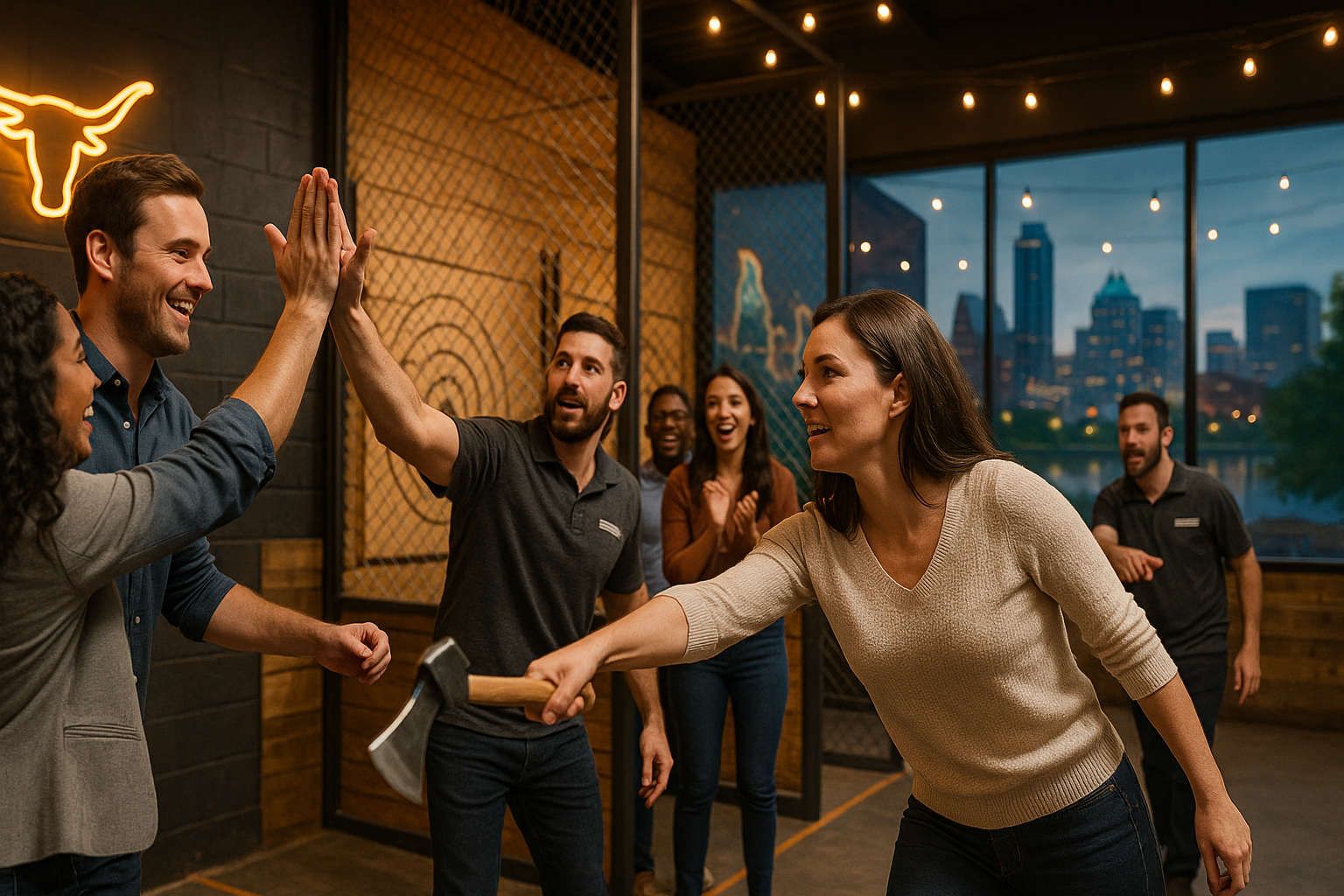
A shared line, clear goals, instant feedback, and cheerful banter create bonding conditions that are hard to simulate in the office. People smile, cheer, and coach each other—without being told to "collaborate." The environment naturally rewards eye contact, active listening, and small wins that compound into real trust.
The psychology behind the fun: mastery, challenge, and psychological safety
Teams don't thrive just because they're together; they thrive because the environment makes it safe and rewarding to try, fail, and try again. Psychologists describe this as "psychological safety"—the sense that you won't be punished or embarrassed for speaking up or making mistakes. In a lane, that mindset is built shot by shot. Nobody nails a bullseye on their first throw; the shared experience of missing, resetting, and adjusting creates a humble, supportive tone. That's why so many leadership frameworks—from Harvard Business Review's take on psychological safety to Google's Project Aristotle—highlight norms that encourage candor and learning. The lane bakes those norms in from the first round, reinforcing that feedback is a gift and progress happens in small, public increments.
From awkward icebreakers to authentic moments
Traditional icebreakers can feel like quizzes. Axe throwing flips the script: the "get to know you" happens sideways while people move, laugh, and compete. You'll hear organic conversation spark between throws—questions about hobbies, friendly dares, playful nicknames—and you'll see teammates volunteer tips after they discover a grip or stance that works. That peer coaching is powerful. It transforms a room full of coworkers into a huddle of allies who actively want each other to win.
When the scoreboard tightens, the room bonds even more: every clap, "you've got this," and "just a hair higher!" invests people in one another's success.
Why kinetic, skill-based activities beat passive mixers
Research shows that active, skill-based experiences create stronger memories than passive social events because the brain tags effortful learning with richer emotional context. In practical terms, a hands-on challenge accelerates rapport. Throwers have a common goal (hit the target), a shared language (rotation, stance, release), and short feedback loops (you know immediately if the throw worked). That loop is a microcosm of effective teams: define, attempt, reflect, adjust. By the end of a session, you've repeated that cycle dozens of times with the same people—a muscle memory for teamwork that carries back to work.
Trust through vulnerability (and a few glorious whiffs)
Nothing builds trust like honest vulnerability, and axe throwing makes vulnerability comfortable. Everyone misses. Everyone laughs at themselves. The fear of public failure fades quickly because the stakes are playful and the atmosphere invites it. A junior analyst can crush a round; a VP can airball five throws in a row. Hierarchies soften when people swap roles—today the junior is the coach, and the VP is the learner. That reversal trains leaders to accept coaching and trains emerging leaders to share it. You can't force that dynamic with a slide deck; the lane creates it in minutes.
The communication you practice without realizing it
Great teams communicate with clarity, brevity, and care. In a lane, those skills show up in small ways: a teammate who says "try a softer release, your axe is over-rotating," instead of "you're doing it wrong." Another who asks, "want a pointer?" before offering feedback. You'll hear check-ins ("are you comfortable with this weight?"), quick status updates ("we're three points behind; let's each aim for the red ring"), and post-throw retrospectives ("that one stuck—your elbow stayed closer"). These micro-moments mirror the exact communication behaviors that reduce friction at work.
A compact model for collaboration
If you diagrammed a productive lane, it would look like a high-performing standup. There's a visible backlog (rounds, games, and challenges), a cadence (throw, review, adjust), and immediate metrics (scores). Teammates swarm problems: if someone's throw is veering low, three people brainstorm fixes. Solutions are tested in the next throw. This collaborative rhythm—short cycles, tight feedback, open help—maps to agile fundamentals. After a few games, people unconsciously adopt these rhythms. Back at work, those habits make meetings shorter, blockers clearer, and success criteria easier to define.
Friendly competition that unites, not divides
Competition can either fracture or fuse a group. The difference is whether the rules celebrate shared success. Well-run axe sessions use formats that let everyone contribute: team relays where each person's points matter, "around the world" challenges that reward consistency, and cooperative boss rounds where the whole squad aims for a cumulative score. When competition is structured to highlight collective wins, it acts as a trust accelerator: teammates celebrate each other because their fortunes are linked.
Safety first: how structure creates confidence
Confidence is a close cousin of trust. Professional venues put safety at the center: trained coaches, clear lanes, throwing line protocols, weighted axes, and strict one-thrower-at-a-time rules. When people see thoughtful structure, they relax. That confidence grows into courage—courage to try a new technique, to coach a manager, to volunteer to go first. In that sense, the visible structure is not a limit; it's a launchpad for exploration and connection.
Designing your event for maximum team impact
Axe throwing works as a team-builder when you design the experience with intention. Start with a short coaching clinic so everyone has a baseline stance and release. Warm up with low-stakes games to build confidence. Then switch to team-based formats that require coordination—rotations, strategy, and cheering. Appoint different captains for each game so multiple people practice micro-leadership. Close with a celebratory challenge and a quick retro: "What did we learn about how we work together?" You'll leave with inside jokes and insights that translate back to meetings and projects.
The trust equation in action
Trust is often defined as credibility + reliability + intimacy, divided by self-orientation. Lane play improves each component. Credibility grows as teammates see each other learn fast and share helpful coaching. Reliability shows up in follow-through—players keep their rotation, call out scores accurately, and stick to safety rules. Intimacy (in the professional sense) develops because people reveal nerves, ask for help, and celebrate openly. And self-orientation drops as the group shifts from individual bullseyes to team wins. By the end of the night, people feel more "we" than "me."
Leaders: what to watch for, what to amplify
If you manage a team, an axe session becomes a live diagnostic. Watch who naturally coaches and who steps back to make space. Notice who asks great questions and who reframes a miss as data. Listen for the teammate who turns tension into humor without dismissing effort. Your job is to amplify those behaviors: call them out, thank them, and connect them to daily work. "The way Priya broke down her throw into three simple cues? Let's try that with our next customer demo." When people see that fun-night behaviors count on Monday morning, they repeat them.
Inclusive by design (and how to keep it that way)
A great team event includes everyone. Choose a venue with multiple axe weights and alternate game modes so people with different strengths can shine. Offer throwing stools or rest breaks, mix skill levels on each team, and encourage non-throwing roles like scorekeeper, cheer captain, or technique spotter. Ask for consent before giving tips; some folks want to tinker quietly, others enjoy step-by-step coaching. The goal is not equal outcomes; it's equal opportunity to contribute and feel valued.
From nerves to "we've got this": a short journey
The arc of a typical session is predictable—in the best way. At first, people feel nervous ("I've never done this"), then curious ("oh, that almost stuck!"), then confident ("I can adjust my release"), and finally proud and playful ("watch this clutch shot"). Walking that arc together is a miniature hero's journey that bonds a group. The emotional memory of conquering something new, in public, makes later work challenges feel more manageable—because you've already proven you can learn together.
Real-world carryover you'll notice next week
The benefits aren't abstract. After a well-run event, you'll often see:
- Shorter, sharper standups because people are used to quick status calls.
- More peer-to-peer coaching because feedback felt useful, not judgmental.
- A bump in psychological safety—more questions, more experiments, more "I don't know yet."
- New informal connections between departments that actually last.
- A shared vocabulary for problem-solving: aim, release, adjust, repeat.
When teams have a recent memory of having each other's backs, they bring that energy into deadlines, launches, and tough conversations.
Evidence you can point to (for the skeptics)
If your CFO wants more than good vibes, there's plenty you can cite. Physical activity correlates with improved mood and reduced stress, which supports better teamwork and decision-making. Research on psychological safety shows it's a leading indicator of team effectiveness and innovation. And cooperative games are known to increase prosocial behavior and cohesion. You don't need a PhD to see it—you can feel the difference by the second game—but the science is happy to back it up.
Making it local: why Austin teams love the lanes
Austin teams are creative, busy, and allergic to bland. An axe night fits the city's vibe—authentic, a little weird, and a lot of fun. It's weather-proof, centrally scheduled, and easy to organize for mixed-size groups. Add tacos after, and you've got a crowd-pleaser that works for startups and enterprise teams alike. If you're budgeting for Q4 morale, compare the cost-per-person against traditional dinners: you'll often find axe throwing delivers more interaction per dollar—and the photos are legendary.
Simple agenda template you can steal
Here's a plug-and-play structure for a 2-hour team event:
- 0:00–0:10 — Welcome, safety, and stance basics.
- 0:10–0:25 — Warm-up throws and one-on-one coaching.
- 0:25–0:55 — Team relay game (points total as a group).
- 0:55–1:15 — "Around the world" challenge (everyone rotates targets).
- 1:15–1:35 — Cooperative boss round (stretch goal score).
- 1:35–1:50 — Finals or friendly playoffs (optional).
- 1:50–2:00 — Debrief: What worked? What will we bring back to work?
This format keeps the energy high, spreads leadership opportunities, and ensures everyone contributes.
Field guide to coaching cues (steal these, too)
- Stance: "Square your shoulders and plant your lead foot like you're closing a door."
- Grip: "Hold it like a firm handshake—no death grip."
- Back swing: "Small and consistent; think repeatable."
- Release: "Let it go where your eyes are looking; relax your fingers."
- Follow-through: "Hands finish toward the target; don't peel away early."
- Diagnosis: "If it over-rotates, release a hair later. If it under-rotates, step a half-foot back."
Notice how each cue is actionable and nonjudgmental. That tone is the same one that makes code reviews, design crits, and sales role-plays effective.
Common concerns (and how to handle them)
"Is it safe?" Yes—when run by trained coaches with clear rules.
"I'm not strong." Strength helps less than timing and technique; many first-time throwers surprise themselves.
"What if I don't want to throw?" No problem—keep score, cheerlead, or coach.
"What if our team is too competitive?" Choose cooperative formats and emphasize shared targets.
The point is to leave more connected than you arrived.
Bring it home: turn lane lessons into work habits
Don't let the momentum fade. Back at work, borrow three rituals from the lane:
- Pre-briefs: Define success and safety before you start.
- Micro-retros: After a meeting or demo, take 120 seconds to note one thing to keep, one to tweak.
- Rotating captains: Spread leadership on routine projects so more people build confidence.
These small structures keep trust compounding long after the axes are racked.
Ready when you are
If you're in Austin and want a turnkey team event with coaches who keep it safe, upbeat, and inclusive, book a session and let your team discover how quickly shared challenge turns into shared confidence. The bullseyes are a bonus—the real win is the way people look at each other afterward: with more warmth, more respect, and the easy trust that comes from doing something new together.
Further reading and resources
- Harvard Business Review – High-Performing Teams Need Psychological Safety
- Google re:Work – Understand team effectiveness (Project Aristotle)
- American Psychological Association – Why teamwork works (overview)
- CDC – Benefits of physical activity for mental health
- Society for Human Resource Management – Team-building activity ideas
Plan a session
Curious to try this with your team in Austin? Learn more or book at Zero Latency VR – Austin.